Taking Bookings Now
Barcelona’s rich history of working class organising continues to shape the character and culture of the city today. What is distinct about this history is the centrality of anarchism. From the 1860s through to the 1930s, anarchism was the predominant political philosophy among the working class of the city. It not only represented an aspirational transformative social vision, but was integral to working class culture and movement organising.
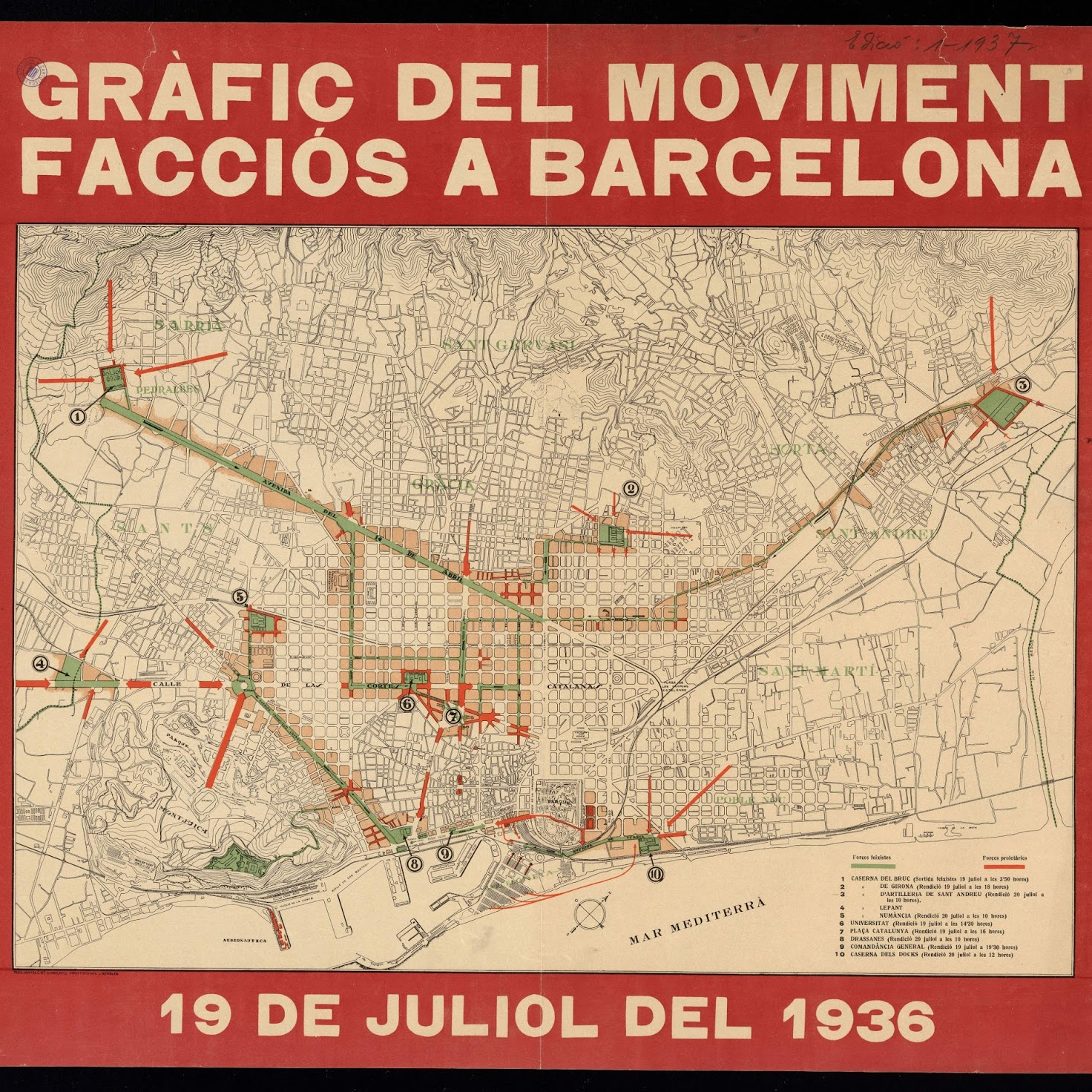
This guided walk offers an introduction to the history of Anarchism in Barcelona, and the people and events that shaped it. It explores the historic evolution of anarchism and the anarchist movement. From the 1860s through to the 1930s, up to the outbreak of Spanish Civil War and the anti-fascist defence of Barcelona in July of 1936.
It explores the following major events and topics:
- Barcelona: Industrialisation, urbanisation, class and conflict, a brief history.
- The Spanish section of the International Workingmen’s Association, and the popularisation of Anarchism in Spain.
- Propaganda by the deed, the bombing of the Liceu Opera House, and the Montjuïc trials.
- Working Class Counter-Culture and Popular Education.
- Union Organising, Anarchist-syndicalism and Solidaridad Obrera (Worker’s Solidarity).
- 1909 – The Tragic week or the Glorious Week? The anti-war movement, anti-clerical revolt and the execution of Francesc Ferrer i Guàrdia.
- The foundation of the CNT (National Confederation of Workers).
- La Canadenca, the general strike, the most successful working class direct action in Spanish history.
- Pistolerismo (the time of the gun). Targeted assassinations and attacks on the labour movement. Moderates and militants in the anarchist movement. Los Solidarios.
- Anarchism during the dictatorship of Primo de Rivera (1923-1930), the founding of the F.A.I (Iberian Anarchist Federation).
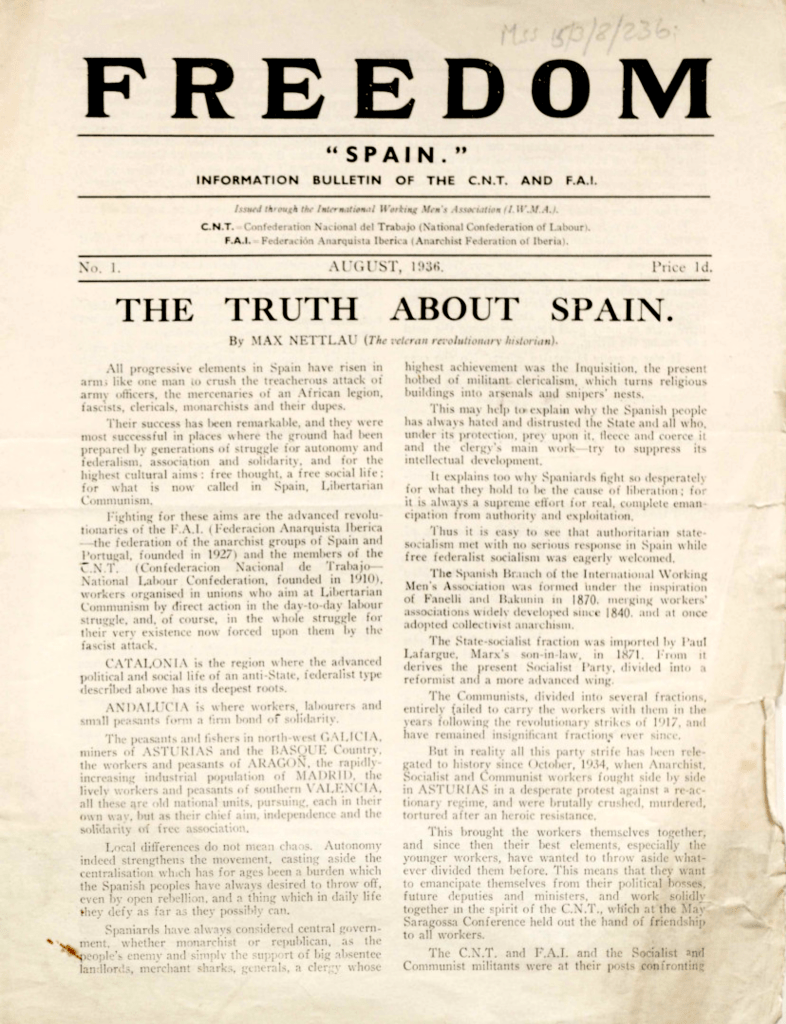
- The Second Republic (1931), the outbreak of the Spanish Civil War, anti-fascist resistance and the defence of Barcelona in July 1936.
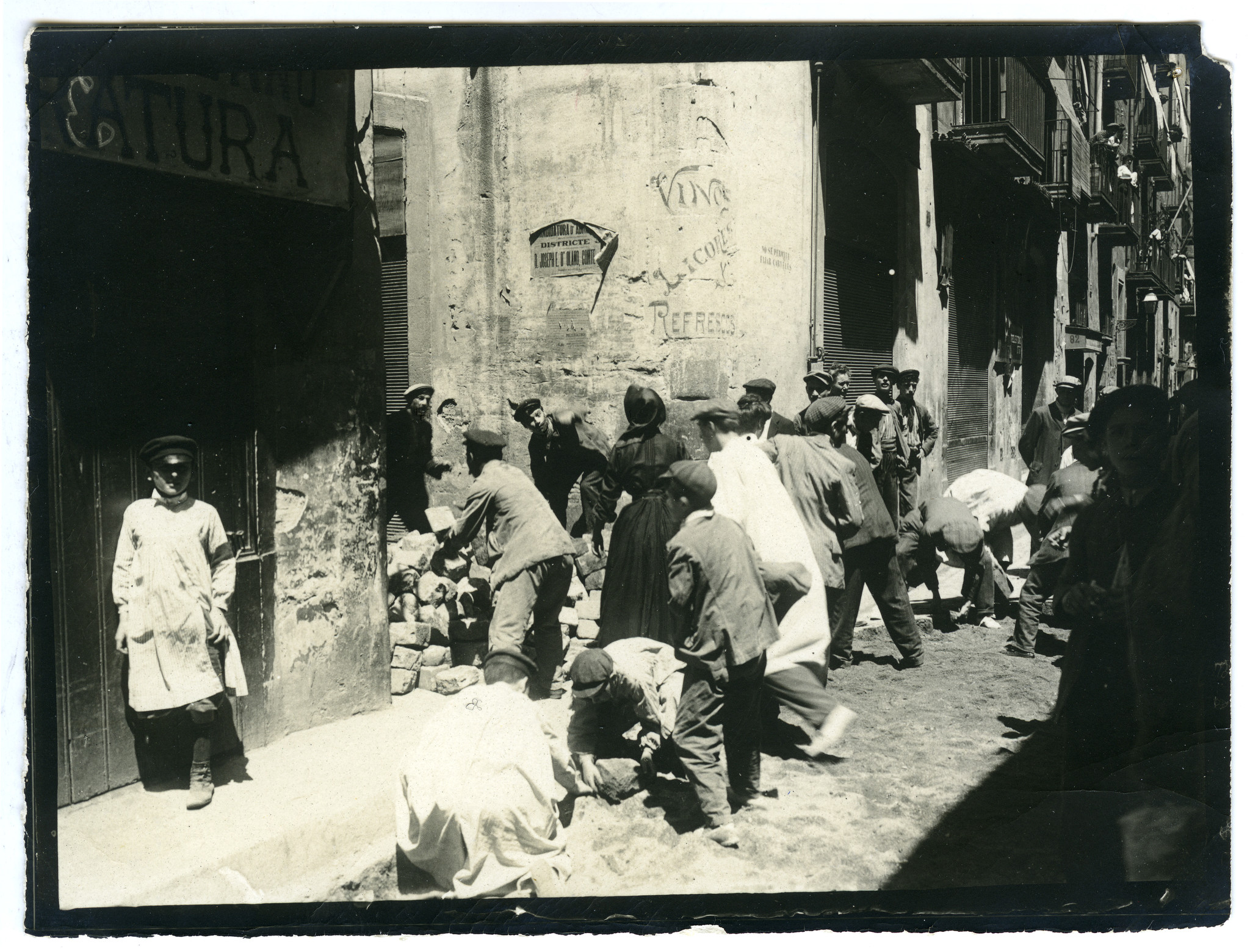
Photographer – Frederic_Ballell_i_Maymí
Booking
- To book email – Caoimhín at

Practicalities
- Dates: Weekly, mostly Wednesdays. (Other days are occasionally possible on request)
- No bookings are currently being taken for August 2026
- Meeting spot: Plaça del Teatre, on La Rambla. (Directions: Open Street Map, Google Maps)
- Time: 10:30 and finish by 15:00
- Duration: 4.5 hours. This includes a break.
- End location: Museu Maritím, Drassanes. (Directions: Open Street Map, Google Maps)
- Price
- €30 per person (Booking in advance by email is required)
- Other options are available for families, young people under 18, persons on low incomes; for example, students, precarious workers, or the unemployed. Inquire by email.
- For private or group inquiries please contact me by email.
- €30 per person (Booking in advance by email is required)
Your Guide
My name is Caoimhín. I am Irish and have lived in Barcelona since 2018. This guided walk is inspired by my interest in popular and working class history and education. Developing this walk enabled me to go deeper into this often overlooked history of the city. I consider it part of an ongoing process of research and learning, that I look forward to sharing with you.

Recommended Resources
Depending on your interests, before or after the tour, I can prepare a personalized bibliography and documentary sources to complement the tour and to support further learning.
- The Great Anarchists, a 10 part series of short introductions to some of the great anarchists, by Ruth Kinna.
- Podcast – Alex Prichard, ”Anarchism: a Very Short Introduction”
- Online Library of Anarchist Texts – https://theanarchistlibrary.org
- Anarchism and the City: Revolution and Counter-revolution in Barcelona, 1898–1937, by Chris Ealham
- Working Class History Map of Barcelona (Contributions on Anarchist History of Barcelona by Catherine Howley)
- Working Class History Podcast on the Spanish Civil War, an interview with Nick Lloyd and Catherine Howley.
A Special Note of Thanks
I’ve had an interest in anarchism for many years, and it was this that first brought me to the city that is now my home. During one of those visits I took Nick’s tour. It was through Nick that I met Catherine Howley. Catherine was Nick’s working partner and did the Spanish Civil War tour for the best part of a decade. Among other things, Catherine is a historian and during this time she developed and ran the history of anarchism tour. We became friends, and when she decided to leave Barcelona she invited me to continue the anarchist tour. Catherine spent many hours with me, sharing her depth of knowledge, experience and resources. I wish to acknowledge and thank you Catherine for all your encouragement and support.
This guided walk is very much inspired by Nick and Catherine’s work on working class history. If you have not taken the Spanish Civil War Tour, I highly recommend it.
 kevinflanagan.ie